Bwampini
A. E. Dziko
1937 - 2005
Malawi's 'Homer'
Part the Second (of Two)
Index of Personal Names (with Pronunciation and Notes)
The voice files that accompany the first two Indices are the kind contribution of Mr Neverson Chikusa and Miss Olivia Nkhwazi.
Index of Tribes and Places (with Pronunciation and Notes)
Please note that villages are called for their chief and may be expressed either in the singular or the plural. For example, Gangire is Paramount Chief of Gangire. His people are Agangire, so Agangire may refer either to the people or their village. The plural of all noun classes represented here is formed with an 'a' prefix.
Index of Figures
It would be quite wrong to state that Bwampini 'is' Odysseus. However, Mr Dziko's character is clearly inspired by Homer's, to some extent Virgil's. The same is true for many characters and places in 'Bwampini'.
We might prefer to say that Bwampini 'figures' Odysseus or is the Odysseus 'figure'. The resemblance between Africa and Greece may be more or less close: difference repays attention just as much as similarity.
The following list is not intended to be exhaustive.
Note that 'Bwampini' contains other Classical allusions which do not appear here, because they are unnamed. They include: Harpies (Chapter 15), Sirens (11), The Wooden Horse (05) and Division 'In Tres Partes' (01).
Words and Expressions
Here are collected various lists of words and expressions which have begun to allow a study of 'Bwampini'.
Illustrations
Here are reproduced Front and Back Matter, also Illustrations, of the 1975 edition of 'Bwampini'. The Illustrations (the artist is unknown) appear also in the 1965 edition.
External Links
I.
Text 1975 ed. (Scribd)
This is a scanned copy of the 1975 edition of 'Bwampini' which has been made available online by the University of Mzuzu from a book that bears the stamp of the library of Lupaso CDSS, Luwinga, Mzuzu. It is the basis of our text. The illustrations are reproduced below.
II.
Synopsis (Scribd)
Mtungambera Harawa (University of Mzuzu): 'Plot Summary in Dziko's Bwampini'.
Mutu 08 / Cap. 08 (Chikutumbwe) on Stage

Zikomo kwambili and Asante sana, Thank you and Gratias, to Mizu Arts Theatre, Lilongwe, for its dramatised reading of Chikutumbwe (the Polyphemus 'figure'); also to Madsoc Theatre and Mwezi Arts (Lilongwe), likewise to Kungoni Centre of Culture and Art (Mua Mission), for allowing place for the performance, respectively, as part of Theatre Renaissance Cabaret, 31st July 2026, and Chamare Day, which was also the Fiftieth Anniversary of Kungoni Centre, 8th August 2026.
Mizu Arts Theatre is a group of young people, living in Lilongwe, who have come together to act. Its origin is in the 2026 Shakespeare Schools Festival - Malawi. It is responsible also for the recording of Bwampini in Chinyanja / Chichewa. Vide supra.
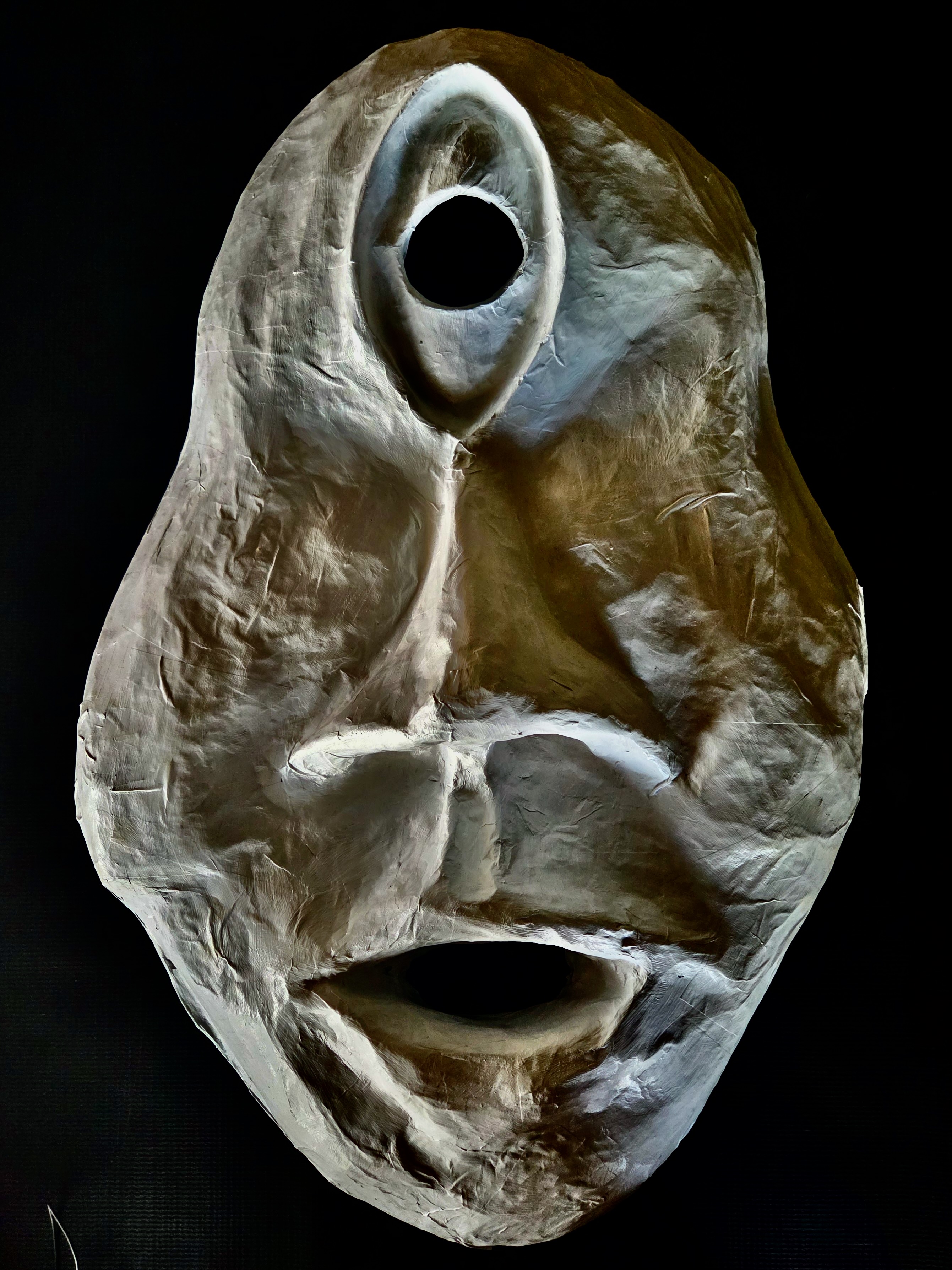
Chikutumbwe's mask is the work of Mizu Arts Theatre in conjunction with visitors from Le théâtre unifié, Tunisia.
I. In rehearsal.
II. On stage.
III. Highlights: In rehearsal and On stage.
We note also this Music Video (YouTube), named for Bwampini, which is the work of Sidoxy MW and dates to 2024. It is inspired by Mutu 04 / Cap. 04: the Abduction of Namadanitsa (the Helen 'figure').
Namula
Written by the late Mr Aloysius E. Dziko
Reconstructed by Mr Patrick Pempho Dziko
Gentle Reader will surely acknowledge that this short poem is the work of Malawi's 'Horace'.
Namula – Bring me a calabash,
For my mouth is thirsty
With the hot weather of September.
Bring the calabash here, and fast,
For I yearn to quench my deep thirst.
Kneel beside me and [ululate]
Whilst I drink and mystify my throat.
Roast a chicken and add hot pepper,
Put onions on [the] fire to chase the fragrant smell,
For this party is mine and mine alone.
Put a poster behind the kitchen:
Never let a visitor in,
For [I] am in dire need of solace and silence.
Namula – Be my radio and dancer,
Help my mouth to swallow this cold beer.
Make a mat beside me, let me lie down,
If the gauge says enough.
Sing sweetly Ngoni songs, especially
The ‘sizo lero sizo’ song,
Thumb your hands together, and keep the calabash full.
Let's [make] merry and dance, for you and I are
Here to celebrate.
Acknowledgements
My thanks are due to Mr Tamali Banda (Kamuzu Academy) and Prof. Francis Moto (Catholic University of Malawi), also Mr Patrick Pempho Dziko (Tisanjalale CDSS), for sharing their memories of the Author.
Messrs Tamali Banda, Andrew Goodson (qd. Kamuzu Academy) and Barnaby Probert kindly commented on the translation and indices.
Mizu Arts Theatre, Lilongwe, has been a delight to work with. I hope that its young people will attempt to bring more of Bwampini to the stage.
This project would not have been possible without the indefatigible encouragement, patience and commitment of Mr Neverson Chikusa, my principal dragoman in the work of copying and translation.
Mr Ben. Carlo (Beaver Builder) extended more help than I had believed possible, when it looked as if I would lose these webpages to the 'White Screen of Death'.
Zikomo kwambili, Thank you and Gratias.